
Jensen Huang resigned as Nvidia chief executive amid corporate-governance concerns and unverified allegations involving Nvidia chip shipments to China. The episode underscores contradictions in Washington’s China policy and the enforcement challenges for semiconductor export controls across Southeast Asia.
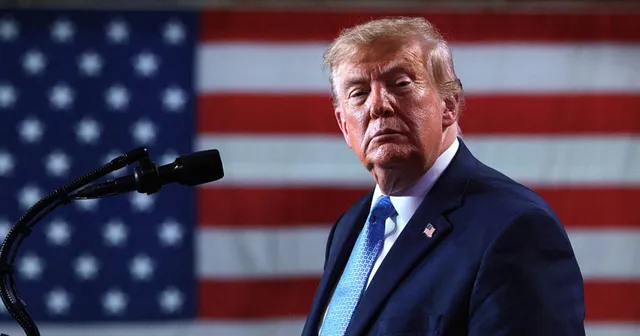
Despite the Democratic midterm landslide, Trump retains broad latitude over U.S. foreign policy because he has routed around congressional and judicial constraints and Democrats lack veto-proof margins, the author argues. A wounded Trump may sharpen rather than soften America First, with Iran and Cuba as possible next tests.
Zongyuan Zoe Liu argues that postwar convergence between poorer and advanced economies relied on favorable trade, investment and security conditions, especially for East Asian late industrializers. She says security concerns, subsidies, sanctions and climate-related trade rules are closing the arbitrage gaps that once helped developing countries industrialize.
Iran’s Mohammad Bagher Ghalibaf said Hormuz will not regain its pre-war status; Tehran has an understanding with Oman, while Washington has not answered Iran’s seven conditions. The article urges Asian oil buyers to use US sanctions waivers to purchase Iranian crude, with toll-free passage publicly verified, instead of paying transit fees.
Five Mother Nature Cambodia activists have been imprisoned after being convicted of plotting against the government and sentenced to six years, as Francophonie leaders prepare to meet in Phnom Penh on November 15. The article calls on those leaders to press Cambodia to schedule their appeal and release them, citing a UN working group’s conclusion that their detention is arbitrary.
The article argues that China’s aging population, often treated as an economic drag, may also be pushing capital and research into life sciences by expanding healthcare demand. It cites BIO data putting Chinese biotech assets at 56% of global licensing deal value in 2026, compared with 10% in 2021, and about US$59 billion in deals.
The column argues that rising US inequality and stagnant worker pay are squeezing the consumers Asia’s exporters rely on. It cites Federal Reserve and EPI figures on wealth concentration and the productivity-pay gap, and calls on Asian governments to strengthen domestic demand.
Moldova launched the 157-kilometer Vulcanesti–Chisinau power line, allowing Romanian and European electricity to reach the capital without passing through the Russian-controlled Transnistrian grid node. The delayed project closes a Soviet-era vulnerability, though Moldova still needs more domestic generation and additional Romanian connections.
China is building overlapping cross-border payment channels—an interest-bearing e-CNY framework, CBETS, mBridge and an expanded CIPS—to deepen renminbi use and lessen reliance on dollar infrastructure, though retail e-CNY adoption remains weak. CIPS processed 7.7 million transactions worth 182.8 trillion renminbi from January through October, and the PBOC governor argued that counting such settlements raises the renminbi’s international payments share.
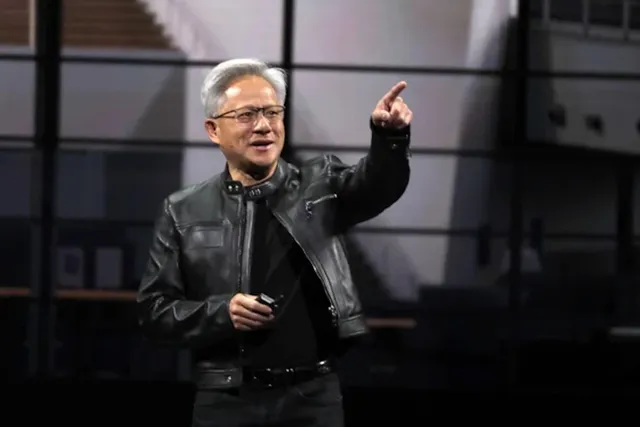
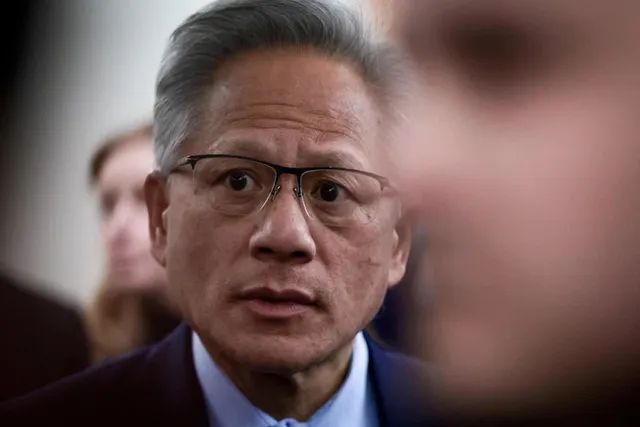
Nvidia CEO Jensen Huang resigned Thursday after reports surfaced of extramarital affairs, one involving a suspected Chinese spy. Atlantic Council experts said his departure could affect US chip export controls, Nvidia's market standing and a planned Trump-Xi meeting.
Nvidia faces continued scrutiny over how its AI chips reach China despite US export restrictions, including its relationship with Singapore-based Megaspeed, which denies any wrongdoing and has not been charged. The episode raises questions about how far Washington can rely on private firms to safeguard sensitive technology.
Nvidia's assurances about restricted chips repeatedly failed scrutiny, with Bloomberg's trade-record analysis finding its BIS inventory reports undercounted Megaspeed sales by 50,000 units. On Thursday, Jensen Huang resigned as Nvidia president, CEO and director effective immediately; CFO Colette Kress became interim CEO, and the company gave no reason.
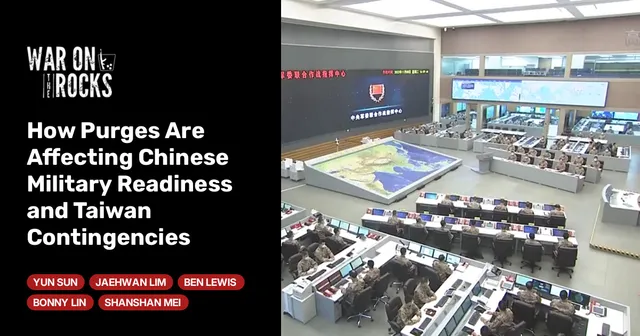
A February CSIS report says Xi Jinping has purged at least 100 senior Chinese military officials since 2022, with dismissals accelerating recently. Experts told War on the Rocks that the purges may have tightened civilian control but have damaged trust, morale and command stability, complicating military readiness.
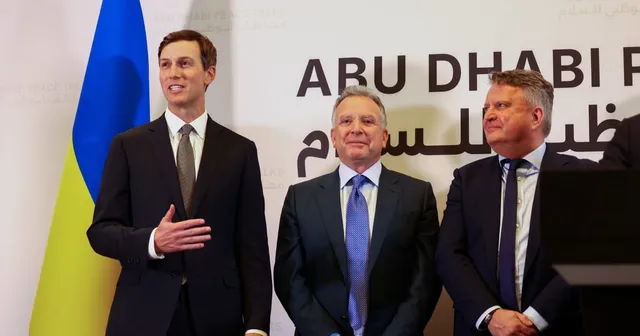
Two days of US-brokered talks in Abu Dhabi between Russia and Ukraine ended without a breakthrough, though the sides tentatively agreed to a major prisoner exchange. Moscow maintained its demand that Kyiv withdraw from the remaining 10 percent of the Donbas, with delegation head Vladimir Medinsky saying every inch of Russian land would be returned.
Trilateral talks in Abu Dhabi among U.S., Russian and Ukrainian negotiators ended without a breakthrough, though the sides agreed in principle to a prisoner exchange. CFR experts said the talks could give Europeans a negotiating seat but warned that widening discussions to broader European security carries risks.
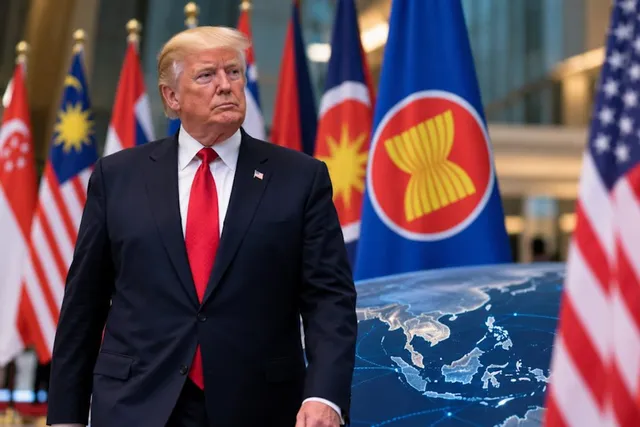
Trump’s attendance at the Manila ASEAN summit is assessed as a test of whether Washington offers Southeast Asia security and economic engagement that respects the bloc’s autonomy. The article says tariff deals negotiated country by country could weaken ASEAN’s collective leverage, while regional disputes and cyberfraud demand accountable governance.
Allegations that Nvidia CEO Jensen Huang had a relationship with an executive US intelligence links to China led the company to investigate, while China dismissed the claims as a smear. The article examines the case within the history of sexual compromise in espionage and vulnerabilities tied to Chinese intelligence law.
GAO found the US Department of Defense still cannot account for over a million lost F-35 parts amid weak supply-chain tracking and limited contractor integration. China reportedly seized Australian F-35 canopy and weapons-bay door parts diverted to Hong Kong, followed by congressional inquiries and Indo-Pacific security warnings.
The authors argue that forward-deployed biomanufacturing could let military forces produce fuels, food and materials nearer the front, reducing reliance on fragile supply lines. They urge the Pentagon to coordinate specialized firms and demonstrate deployable systems, while noting technical and feedstock limits.
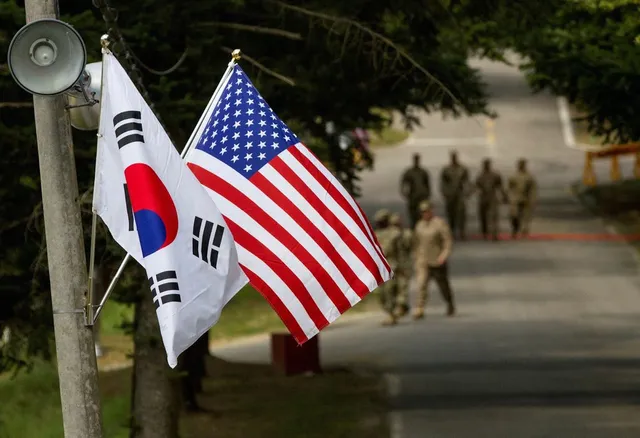
An analysis of US–South Korea plans to transfer wartime operational control identifies three certification gaps: the US four-star kept command during a two-day exercise, an allied command network upgrade is projected through 2029, and public alliance documents lack explicit cyber command relationships.