Anya Schiffrin's report on New York City agencies' use of paid influencers and a Signal group for creators was followed by a City Council oversight hearing, disclosure bills and an ethics complaint. Many questions about the practice remain unanswered.
Italy's data protection authority fined Meta €805 million after finding Facebook's Android photo-suggestion feature was enabled by default and read Italian users' galleries without explicit consent. Meta has 60 days to turn the feature off by default and request separate consent; it intends to challenge the penalty, which it describes as disproportionate.
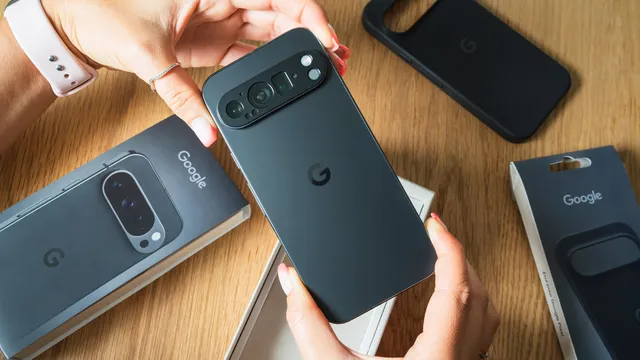
Google moved the Pixel series from Qualcomm's Snapdragon to its own Tensor silicon starting with the Pixel 6 in 2021, aiming to run AI models like speech recognition on the phone rather than in the cloud. Google says the Tensor G6 carries 50 percent more TPU compute than its predecessor and, with Gemini Nano, can handle on-device AI tasks up to 3.5 times faster using up to 3.5 times less energy.
Paleontologists including McGill University researchers report fossils of a new rodent species, Yakamys sirindhornae, from a Krabi lignite mine in Thailand, dating to about 34 million years ago. They estimate the animal weighed roughly 30 kilograms, though body-mass estimates carry substantial uncertainty, and say the find suggests Southeast Asia played a role in early rodent gigantism.
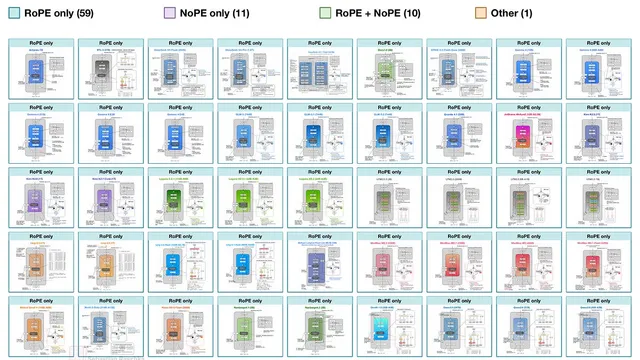
A technical walkthrough explains how large language models encode token position, comparing learned absolute embeddings such as GPT-2's table with fixed sinusoidal schemes and the rotary method RoPE. It supplies visual examples, light math, a small PyTorch implementation, and a survey of positional choices in recent open-weight architectures.
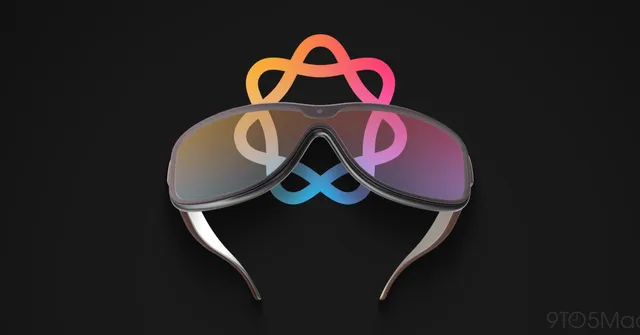
Bloomberg's Mark Gurman reports Apple's Siri AI smart glasses should be introduced at the next WWDC and go on sale by the end of the year. They will largely rely on a nearby iPhone, won't run apps directly, and prototypes are slightly thinner than Meta's second-generation Ray-Bans.
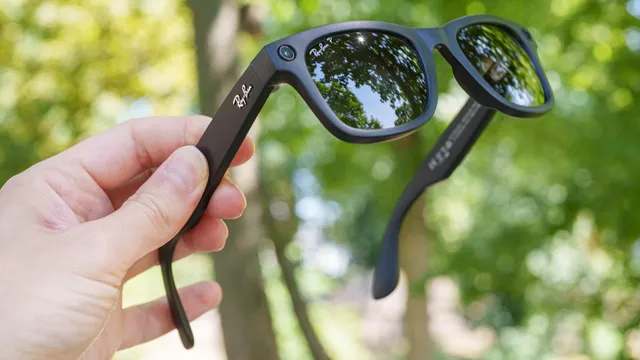
Courthouses, schools and military sites in several jurisdictions have moved to restrict camera-equipped smart glasses on privacy and safety grounds. Pakistan's Punjab province imposed a 30-day ban from October 2026 covering use and sale, while New York barred such glasses from all state and local courts starting July 20, 2026.
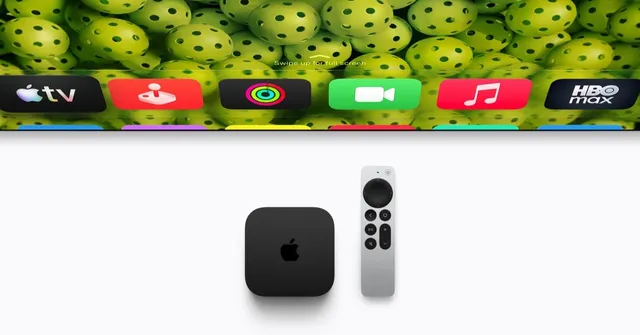
Apple's new Apple TV 4K ships with an A19 chip, 128 GB of storage and 8 GB of RAM, double the memory of the prior model, yet tvOS still limits each app to 2 GB, and 9to5Mac confirmed apps that exceed that allocation are force-quit. The unchanged cap also affects graphics-heavy games and the game decomp community.
An interactive atlas visualizes internal representations of the Qwen3-1.7B language model, plotting residual-stream token states from thousands of English, Chinese, German, Croatian and Python examples in a reduced three-dimensional view. The author reports that the visible sheet held almost all 3D variation yet captured about 17.6% of full token-state variation, and that axes tracked language with topic structure still present.
A technical walkthrough explains how large language models inject token-position information, contrasting GPT-2's learned absolute position table with rotary schemes such as RoPE that act inside attention. It adds a small PyTorch implementation and previews which positional methods appear in 2026 open-weight architectures.
Google DeepMind launched Gemini Robotics 2.5, a vision-language-action model it says improves dexterity, reliability and safety for complex physical tasks. In a proof-of-concept, Apptronik’s Apollo 2 used it for automotive kitting on Mercedes-Benz production lines and reported a 96% success rate.
A Microsoft Outlook and Teams outage lasting nearly 24 hours affected millions of users in 74 countries and prompted renewed European calls to control the continent's digital infrastructure. As EU leaders met in Dublin for an AI summit, Mistral's Arthur Mensch put the share of European digital services hosted on European infrastructure at 20%, while Brussels has a cloud bill that would rank providers by sovereignty.
The Supreme Court will review Mullin v. RAICES, a challenge to Trump's January 2025 executive order that bars nearly all legal migration across the southern border. The dispute centers on whether illegal migration and drug smuggling qualify as an "invasion" under the Constitution's Guarantee Clause.
Italy's data protection authority fined Meta Platforms Ireland €805 million, saying Facebook's Android app accessed users' photos, videos and metadata without specific consent and enabled gallery suggestions by default. The regulator ordered Meta to seek separate consent and keep the feature off by default.
Euclid's first major data release, based on 13 months of observation, produced 15,000 new candidate strong gravitational lenses, far exceeding the fewer than 1,000 previously confirmed. Astronomers use these lenses to probe dark matter and dark energy, and the release also catalogs more than 900 million galaxies.
Uber warned drivers that hackers stole personal and driver's licence data from vendor Fireworks AI, which told Uber on 9 October that hackers had stolen internal credentials. State attorney general notices list 7,870 affected people so far in Massachusetts, South Carolina and Rhode Island, with California and Illinois residents also notified without counts.
Judge Noël Wise of the Northern District of California denied a joint motion to dismiss from Samsung, SK hynix and Micron in a consumer class action alleging they coordinated cuts to DRAM production. The ruling is at the pleading stage and nothing has been proven, with the companies due to answer by December 7.
The FBI warned that multiple threat actors have weaponized the open-source ARTEX framework, which links to external AI models, to automate attacks on organizations worldwide. Its advisory says some intrusions reached privileged access in under three hours and cites a ConnectWise breach affecting Microsoft 365 customer environments.
Tesla is inviting selected US customers to order its steering-wheel-free Cybercab for $29,990, with a $1,000 non-refundable deposit and deliveries estimated for December 2026. Driving it requires a $299 monthly subscription, and use is limited to Tesla-approved areas while US safety regulators review compliance.
AO3 has returned after a two-week outage linked to a security incident, though some features remain temporarily disabled. Its operator says no user data was deleted, cannot rule out a database compromise, and advises users to change passwords.
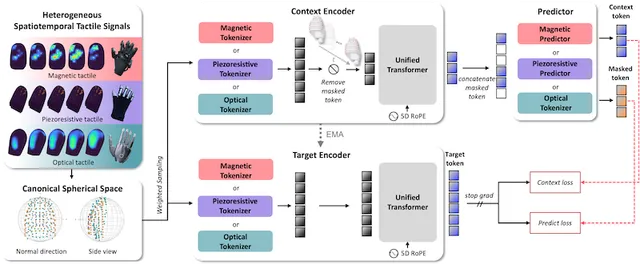
Robbyant, an embodied AI unit within Ant Group, has released LingBot-Touch, an open-source tactile foundation model pre-trained on almost 5,000 hours of real-world touch data spanning three sensing modalities. Across 26 real-world tests, four action models gained roughly 14 to 26 percentage points in average task success compared with running without tactile input.
Dell’s Pro Max Micro (FCM2250) is a roughly 2.9-liter workstation with a 24-core Core Ultra 9 285, a 24GB RTX PRO 4000 Blackwell SFF card and 96GB of DDR5. Linux tests showed it leading comparison systems in Ollama throughput and image generation, though its 24GB graphics memory could not load 28GB-30GB models.
Jonathan H. Adler disputes a New York Times report asserting that the "dangerous and unusual" test in District of Columbia v. Heller rests on a misquotation of Blackstone. Adler argues the "See" citation signal denotes supporting authority rather than direct quotation, and notes that former Scalia clerk John Bash says he gave the reporter this explanation before publication.
Prescribed burns are controlled fires meant to cut wildfire fuel, and a planned burn on Angel Island sent smoke into West Contra Costa County after winds shifted. A UC Berkeley fire science professor says climate change is making suitable spring and fall burning windows less predictable.
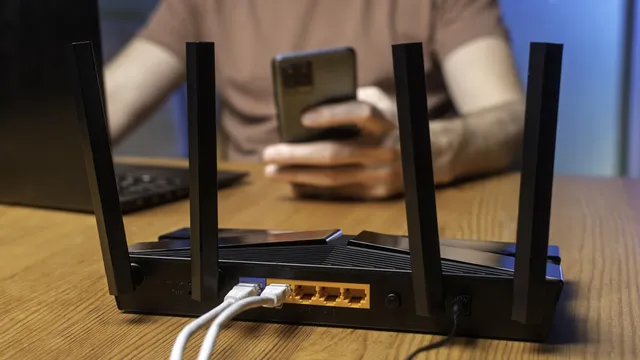
Wi-Fi 8, still in development, is intended to improve wireless reliability rather than raw speed, with final approval expected in 2028. ASUS and TP-Link have announced draft-spec routers, while the standard is designed for 25% better weak-signal throughput, 25% fewer dropped packets and 25% lower latency at shaky moments.