Geopolitics

International relations, foreign policy, and global power dynamics

2 members Created Sep 2026
EU

Europe

87 threads 0 followers
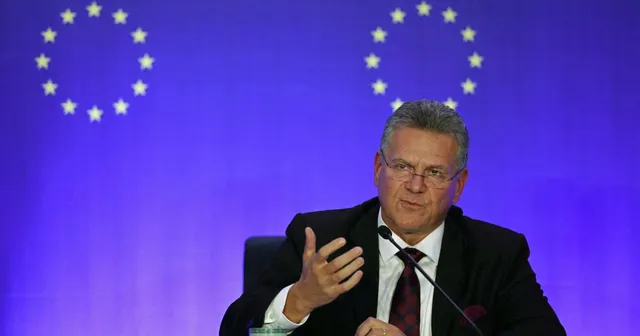
Europe’s China Auto Deal

A Council on Foreign Relations analysis calls Europe’s auto deal with China a useful first step, noting it caps hybrid vehicle exports while leaving broader gaps. It argues Europe needs a more coherent trade and industrial policy across batteries, chemicals, and machinery to counter China’s export surge.

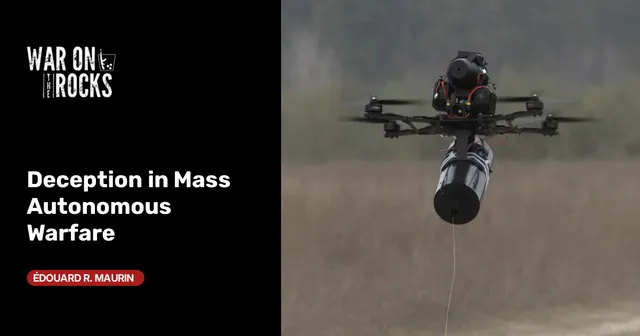
Deception in Mass Autonomous Warfare

A veteran of the Pokrovsk fighting argues that sensor-saturated battlefields require layered deception, from fake radio calls to decoys and reflexive control. He cites Russian drone decoys and Ukraine's Operation Vivaldi, while noting that machine-classifier effects remain hypotheses rather than observed results.

— via War on the Rocks, Édouard R. Maurin

Reading Pyongyang Through the Cracks of the International System

Since December 2023, Pyongyang has dropped the decades-old goal of unification, called South Korea its "most hostile state," and scrubbed unification from the Workers' Party charter and the constitution. Three analysts who flagged early rhetorical shifts in 2023 say policy has since caught up, including a Russia treaty and troops sent to fight in Ukraine.

— via War on the Rocks, Markus Garlauskas

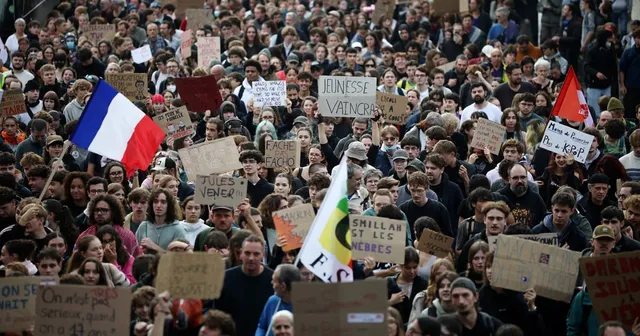
After Bosnia’s election, a way forward or deeper deadlock? | A Debrief with Ivana Korajlić

Bosnia's first election with biometric voter ID and optical ballot scanners drew a record-low turnout of about 40 percent, and nationalist parties still won in all three communities. Dodik's and Čović's parties will now both sit in the state presidency, and each leader says neither will govern without the other.

— via Atlantic Council, oolson

10/20/26 National Security and Korean News and Commentary

Trump appointees asked a federal cybersecurity agency to secretly hack a voting machine, according to one of the national security stories in this October 20 roundup. Another item reports that hundreds of federal websites lack a key defense against spies, a senator says, and a third says the administration is holding up Patriot missiles for Ukraine.

— via Small Wars Journal, David Maxwell

Buying What You’d Bomb: The Legal Problem with the Russian Diesel Deal | Just Security

Two legal scholars argue the U.S. can't call Russian oil infrastructure a lawful "war-sustaining" target in its own wars, tell Ukraine to stop hitting it, and then buy Russian diesel. In their reading, the 300,000-ton deal Trump announced October 9 exposes the U.S. to legal responsibility under the laws of war and the Pentagon's own doctrine.

— via Small Wars Journal, SWJ Staff

The European Union as a compound power in Cold War 2.0

The EU exported $4.43 trillion in goods and services to non-members in 2024, 13.7 percent of the global total and ahead of China's $3.75 trillion and the US's $3.19 trillion. A new report argues the bloc's growth and productivity gaps hide real strength, and that the thing holding Europe back is willingness to act, not capacity.

— via Atlantic Council, Piotr Arak and Velina Tchakarova

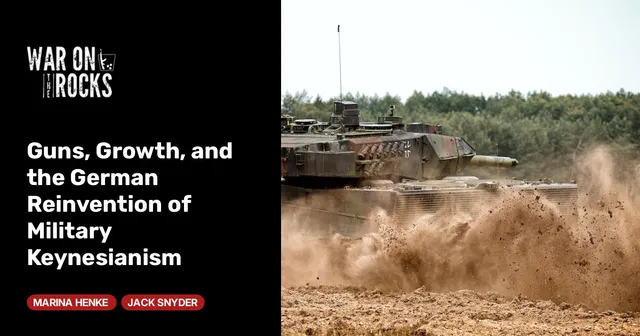
Guns, Growth, and the German Reinvention of Military Keynesianism

Germany's defense spending nearly doubled from 46.6 billion euros in 2021 to 86.5 billion in 2025, with about 750 billion euros planned for 2026 to 2030, more than twice France's projected total. A March 2025 constitutional change, passed by an outgoing Bundestag that still held the two-thirds majority, also served as a bet that military spending can revive a stagnating industrial economy.

— via War on the Rocks, Marina Henke

In Skepticism We Trust: Ukraine Reacts to the Diesel Deal

Yuriy Lutsenko says Trump betrayed Ukraine by lifting the ban on Russian diesel trade while Russian strikes on civilians escalate, and claims the move serves Trump family business interests pursued by Witkoff and Kushner. He also blames Zelensky's governance and calls for sea-drone strikes on Russia's shadow fleet for every hit on a civilian target.

— via War on the Rocks, Nicole Wiley

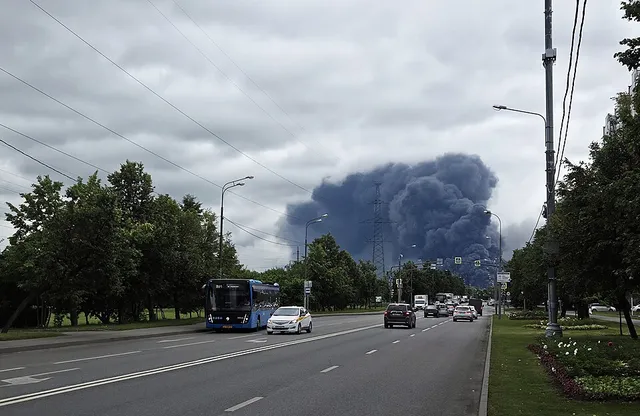
Dispatch from Moldova: How to restore NATO’s deterrence against Russia’s escalating drone attacks

Russian drones struck merchant ships in Bulgaria's and Romania's Black Sea waters in the span of days, leaving crews dead or missing, while more than twenty drones entered Moldovan airspace in September alone. The piece argues these are deliberate military attacks meant to frighten Ukraine's neighbors and erode support for Kyiv, and it sets out five principles for restoring deterrence.

— via Atlantic Council, Ian Brzezinski

Optimizing the NATO 1.5 percent investment commitment for energy security

NATO's 2025 pledge to spend 5 percent of GDP on defense includes up to 1.5 percent for resilience, and the authors want a capability-based framework drawn largely from Ukraine's defense of its energy system to guide that money. They say the alliance should arrive at the 2029 progress review with the framework already built into its measurements.

— via Atlantic Council, Chuck Dockery, Joel Spangenberg, Thomas Winter

Ensuring US military readiness in the face of water, power, and fuel shortages

Most US and allied bases overseas rely on host nations for power, fuel storage and fresh water, and the wars in Ukraine and Iran show those systems are prime targets. The brief calls for a comprehensive review of installation infrastructure so forces can keep operating when the world goes dry, dark and empty.

— via Atlantic Council, Michael Dunn, Abraham Holland, Marcus Lee