
Science

Science

— Research, discoveries, and discussion across all scientific disciplines
2 members Created Sep 2026
BI

Biology & Medicine

313 threads 0 followers
Glowing plants reveal immune responses around infection sites via two colors

Researchers at the MRC Laboratory of Medical Sciences built a two-color autoluminescent reporter by pairing a red-shifted fungal luciferase with a green one. Reading the color ratio rather than brightness corrects for metabolic effects, letting them track plant defense signaling and localized immune activity around infection sites over long periods.

— via Phys.org

An ancient virus in chimpanzee DNA switches off a gene that is active in humans

Lund University researchers report that a remnant of an ancient retrovirus, PTERV1, silences the LINC00662 gene in chimpanzees, while the gene stays active in humans. Removing the viral DNA with CRISPR in chimpanzee cells restored the gene's activity, and silencing it in human brain organoids lowered activity of genes tied to nerve cell development.

— via Phys.org

Scientists uncover the molecular pillars that shape our cells' powerpacks

Researchers at the University of Ottawa identified SPRIZ, a protein that acts as a rigid pillar linking the two mitochondrial membranes while holding them a set distance apart. Altering it changed the size of the intermembrane space, molecular access and calcium uptake, and the protein appears to be present only in vertebrates.

— via Phys.org

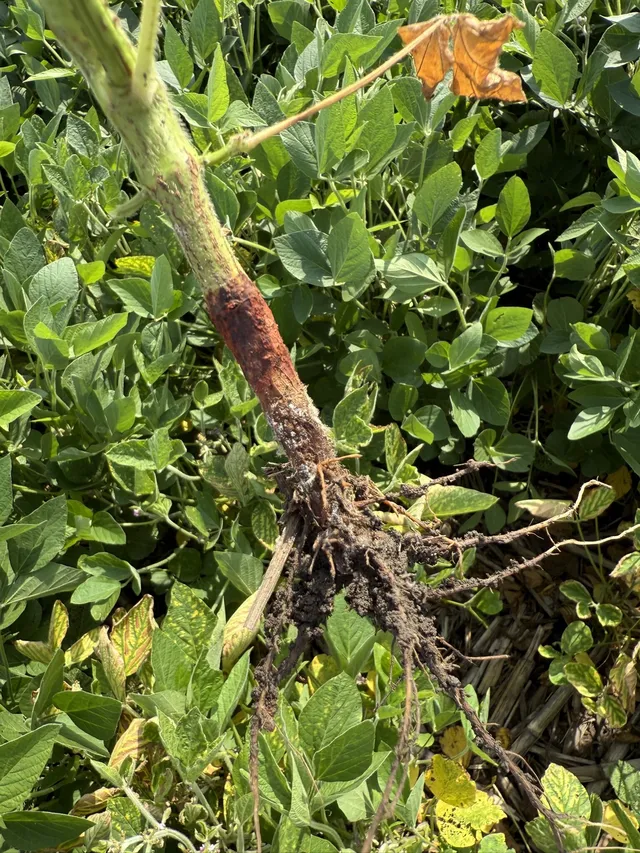
What is red crown rot? Expert explains emerging soybean pathogen

Red crown rot, a soil-borne fungal disease of soybean first found in Illinois in 2018, has reached 51 Illinois counties and several neighboring states. Severe infestations can cut yield by 60%–70%, and its symptoms resemble other diseases, so testing suspect plants is advised. Sanitation and avoiding soil movement help, while crop rotation shows little benefit.

— via Phys.org