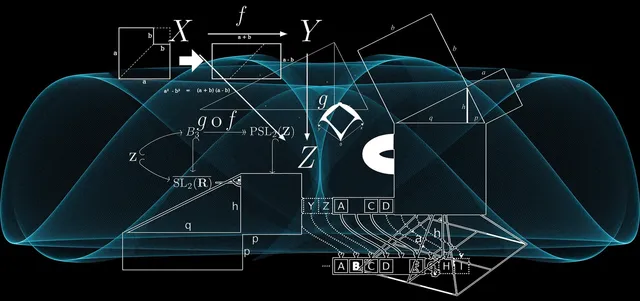
Levent Alpöge, a mathematician employed by Anthropic, announced a claimed AI-assisted proof of the Riemann hypothesis, released as more than 17 million lines of Lean code instead of a human-readable manuscript. The result is not yet confirmed, though Lean and MathLib groups said they believe the formalization is correct.
Research, discoveries, and discussion across all scientific disciplines
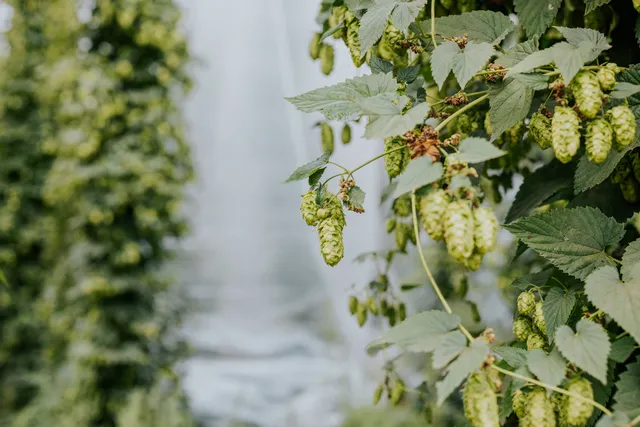
New research from Oregon State University finds smoke-affected hops alter beer aroma chiefly when added after fermentation, with panelists detecting stronger smoke notes as the smoky share rose. The authors suggest mixing smoky hops with clean ones could be a practical option.
Researchers report that lab-made allomelanin, the fungal pigment found in radiation-resistant molds, contains built-in nanometer pores that trap organophosphorus compounds such as nerve agents and pesticides. Adding zirconium clusters converted the material into a catalyst that broke down half a less-toxic surrogate chemical in under ten minutes, faster still under bright light.
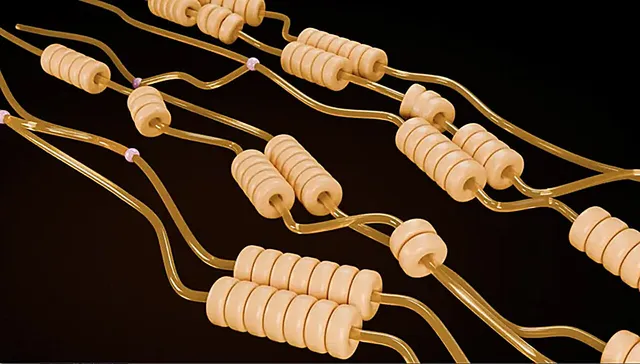
A team led by chemist Chenfeng Ke at Washington University in St. Louis has developed a biodegradable hydrogel made from sugar and polyethylene glycol that strengthens when bent or stretched rather than weakening. The researchers report that cyclodextrin rings slide to reinforce strained regions, and the material behaved as predicted across 10,000 bending cycles in the Nature Materials study.
A proof presented at the Symposium on Theory of Computing in June 2026 identifies exactly four minimal network structures that can defeat perfect resilience. In networks without those structures, routing rules can always deliver packets from any source to any destination despite failed links.
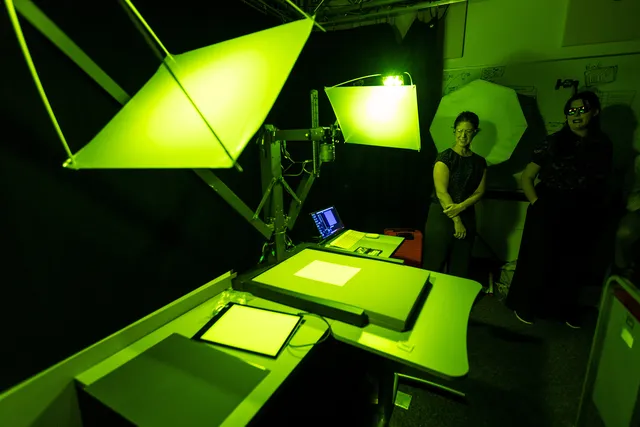
At the University of Illinois Urbana-Champaign, a workshop used multispectral imaging and machine learning to try to recover faint ink from fragile medieval manuscripts, including a Greek papyrus glued to a parchment. Organizers said final image processing may allow the papyrus’s sixth- or seventh-century dating to be revised.
Anthropic mathematician Levent Alpoge said he used the company's Claude chatbot to produce a proof of the Riemann hypothesis, releasing a four-page note that has not been independently verified or peer reviewed. He said the approach also covers the generalized version and that he had consulted Anthropic chief executive Dario Amodei before announcing it.
After the second Trump administration froze or rescinded federal science funding and the federal science workforce shrank by about a fifth in 2025, scientists and nonprofits have rebuilt some shuttered tools and advisory efforts. Examples include a rebuilt NOAA climate website and emergency grants, though experts say philanthropy cannot replace federal support.
A European Chemicals Agency expert committee has backed EU-wide restrictions on PFAS, a group of more than 10,000 chemicals, citing environmental and health risks. Its opinions also support restrictions on certain chromium(VI) substances, and the European Commission is expected to propose bloc-wide rules in early 2027.
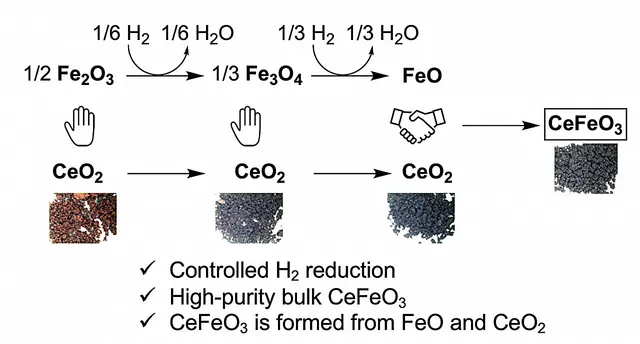
Researchers including scientists from Ehime University produced cerium orthoferrite, CeFeO3, by hydrogen reduction, reaching phase purity up to 99 mol%, and clarified its stepwise formation route via FeO reacting with CeO2. The Inorganic Chemistry study did not test catalytic performance or industrial productivity.
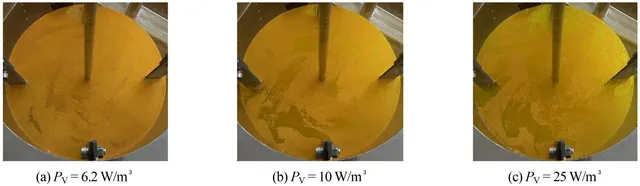
Researchers at Nagoya Institute of Technology report that solid–liquid mixing becomes effective when particles no longer stay still at the liquid surface for more than one to two seconds. Their stirred-tank tests also indicate that placing the impeller near the surface can reduce the power needed.
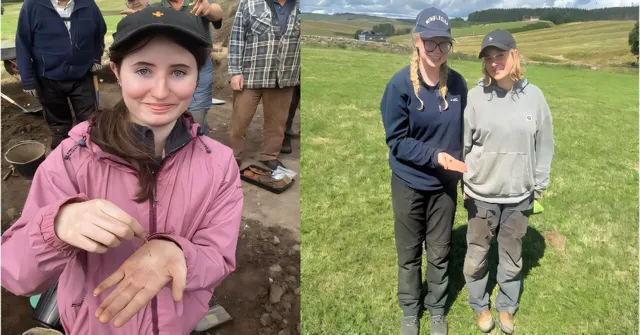
In a summer 2026 excavation at Redesdale, Northumberland, 52 first-year archaeology students and volunteers recovered Roman finds including a 7 cm gold chain, an inscribed lead sheet, a gilded cavalry fitting and a carnelian intaglio depicting Jupiter. Researchers said the quantity and quality of the artifacts surprised them, and the site is part of a long-running study of life and industry on Rome's northern frontier.
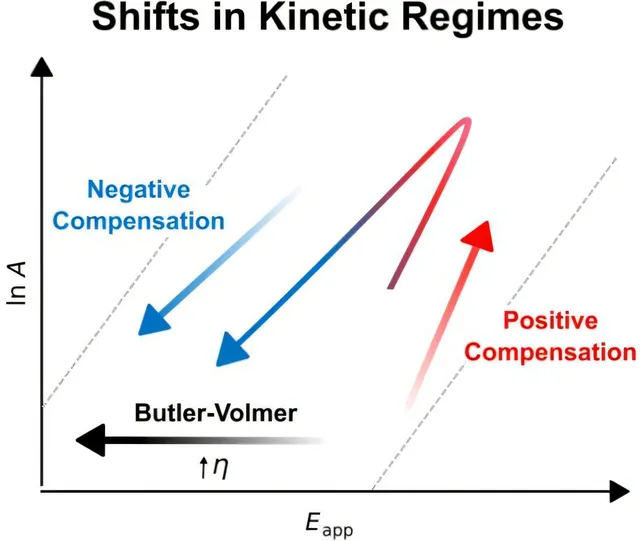
A deliberately simple kinetic model of the hydrogen evolution reaction, containing no potential-dependent entropy in any individual step, reproduces the entropy–enthalpy compensation seen in electrocatalytic rate measurements. The authors conclude that shifts in kinetic regime and surface coverage, rather than solvent reorganization alone, can account for these temperature-dependent fingerprints and offer a baseline for interpreting experimental data.
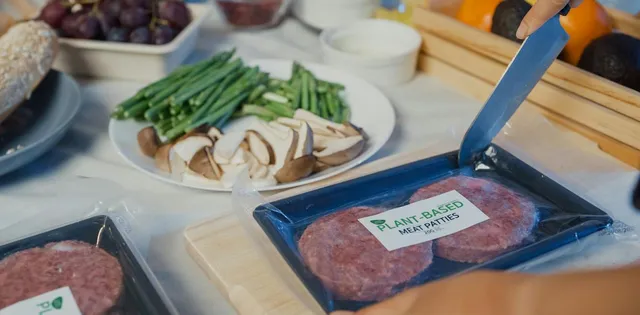
Food scientists use plant proteins from soy, peas or wheat and processing methods such as extrusion to build fibrous textures that resemble meat, while fats and flavorings supply juiciness and aroma. Research also examines 3D food printing, where printable protein inks must flow through a nozzle yet hold their shape.
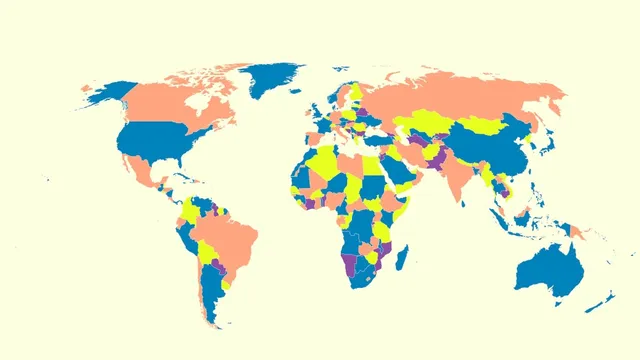
An international team says it has made the first major advance in 30 years on the Four-Color Problem, with an algorithm that colors planar graphs in linear rather than quadratic time. The researchers attribute the speedup to finding many more reducible configurations, or handles, and say it may apply to surfaces with holes.
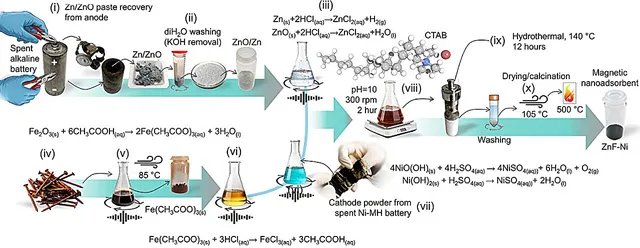
Researchers at TU Wien synthesized magnetic nanoparticles from metals recovered from spent alkaline and Ni-MH batteries and rusty iron scrap. The nickel-modified zinc ferrite bound Congo red dye and was separated with magnets in a flow-through prototype, clarifying water within 25 minutes.
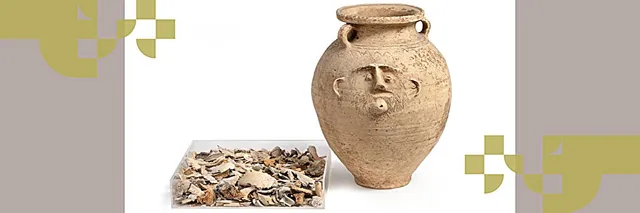
A Durham University-led study used combined strontium and lead isotope analysis on 22 cremated burials from Roman Colchester, Britain's first Roman capital, and found that several people grew up outside Britain. Three had chemical signatures pointing to childhood in Mediterranean regions, while remains in the decorated Colchester Vase indicated a man of Mediterranean origin.
Researchers at the University of Córdoba have built a prototype rechargeable zinc-air battery that uses vitamin B12 bound to carbon nanotubes as a catalyst, running up to 250 charge and discharge cycles. The study, published in the Journal of Materials Chemistry A, reports the vitamin aids oxygen reduction during discharge and oxygen production during recharging.
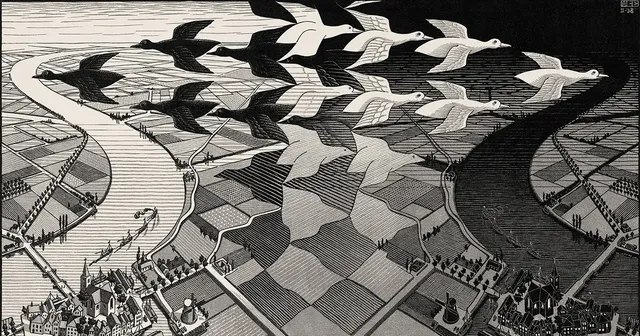
An exhibition at New York City’s National Museum of Mathematics explores how M.C. Escher, despite struggling with formal math, developed tessellation methods and depicted hyperbolic space. His art drew on exchanges with mathematicians, and later researchers reverse engineered the geometry behind works such as Print Gallery.
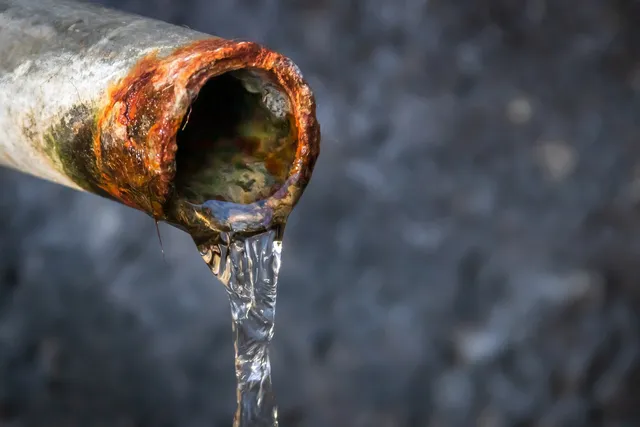
A study describes a machine learning tool developed through CREWW, a University of Exeter and South West Water collaboration, to predict likely lead service pipe locations where records are incomplete. The approach is meant to help target investigations and replacements and supports South West Water's goal of becoming lead-free by 2050.