Artificial Intelligence

AI research, industry, tools, and the debate over where machine intelligence is taking us

2 members Created Sep 2026
RE

Research

50 threads 0 followers
NVIDIA Nemotron 3.5 Transcribe and Granary v2: Intelligent Multilingual Transcription You Can Prompt and Adapt

NVIDIA released Nemotron 3.5 Transcribe, an open-weight promptable model combining transcription, speaker attribution, translation and audio Q&A across 40 languages. It reports top open-model results on several leaderboards, and the release includes the Granary v2 data pipeline and fine-tuning recipes, with a medical case study showing a 45.8% relative WER cut.

— via Hugging Face

Making machines that can listen

MIT professor Paris Smaragdis is building machine-learning systems that can hear and interpret sound, from separating audio mixtures to supporting musicians. His path ran from Berklee and the MIT Media Lab through Mitsubishi, Adobe and Illinois, including Beatles archival audio cleanup that contributed to an Emmy win.

— via MIT News: AI, Adam Zewe | MIT News

Vibe genes? Natural(ish) language comes to protein, genome design software

Researchers in China built Pinal, an AI tool that turns plain-language prompts into designed protein sequences. In tests only a few dozen candidates were made per target and few worked, with one of 29 fluorescent designs glowing. Hugging Face also released Carbon X, a locally runnable model that handles both DNA and English.

— via Ars Technica: AI, John Timmer

LitPivot: Developing research ideas through dynamic contextualization within the literature landscape

LitPivot, built with University of Pennsylvania collaborators, helps researchers revise early ideas by organizing literature around a proposal's problem, contribution and evaluation facets. In a 17-researcher study, domain experts rated LitPivot-developed ideas as better grounded in the literature than those made with a text editor and AI chat tool.

— via Hugging Face

This design software reimagines everyday objects as self-aware devices

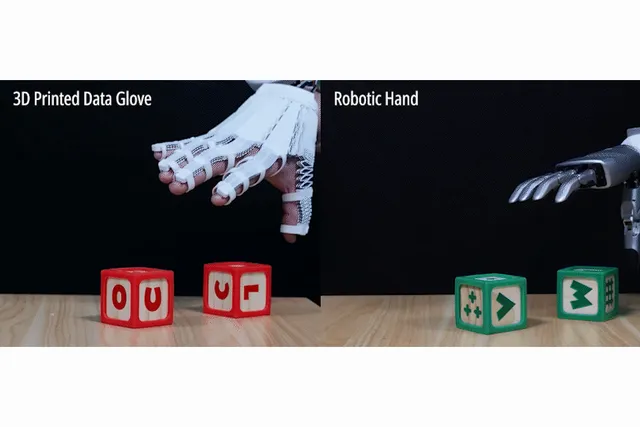
MIT CSAIL and Tianjin University researchers built X-Hinges software that lets users design 3D-printed objects with embedded sensors on up to three motion axes. It embeds two different materials so sensor signals stay clear, enabling items like a robot-teaching glove, an origami lamp and a shark-shaped game controller.

— via MIT News: AI, Alex Shipps | MIT CSAIL

ALTK-Evolve: How learned memory tops the τ²-bench leaderboard on customer service tasks without a frontier model

A plain ReAct agent running GPT-4.1, an older non-reasoning model, solves 67.5% of τ²-bench retail tasks on all four attempts, beating every retail entry in an October 12, 2026 leaderboard snapshot. The gain comes from a short list of rules the same model wrote from its own past attempts and added to the system prompt, with no weight updates.

— via Hugging Face

NVIDIA Cosmos3-H-Dreams: Bringing Clinical Surgery to Life Through Generative Simulation

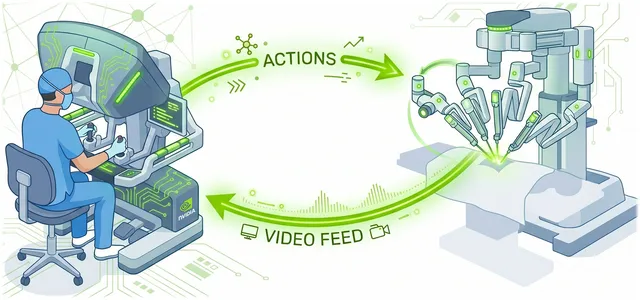
NVIDIA's Cosmos3-H-Dreams generates surgical video that reacts live to instrument commands, trained on clinical gallbladder-removal recordings from CMR Surgical's Versius platform. By the team's account it is the first real-time generative surgical simulator of its kind, and it runs interactively on a single RTX PRO 6000 GPU.

— via Hugging Face

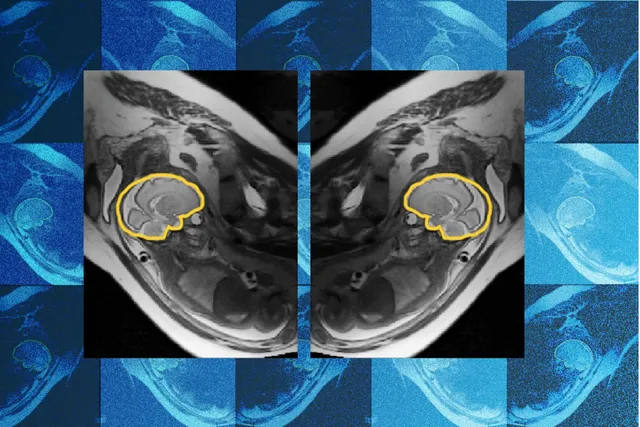
Why teaching AI about symmetry could make prenatal diagnosis more reliable

A new deep learning model called E(3)-Pose tracks a fetus's head as it moves during an MRI, so the slices don't end up scattered at odd angles and leave gaps that can hide brain abnormalities. It gets there by building the head's left-right symmetry into the network itself instead of making the model learn that physics from data.

— via MIT News: AI, Alex Ouyang | Abdul Latif Jameel Clinic for Machine Learning in Health

Welcome Muse Spark Open: open-weight frontier multimodal mixture-of-experts model from Meta

Meta's Muse Spark Open packs about 816 billion parameters but activates only around 42 billion per token, so it needs the memory of a giant model and runs at the speed of a much smaller one. The open-weight model takes text, images, audio and video, handles up to one million tokens of context, and was trained for agentic coding.

— via Hugging Face