A blog post tests a recent paper's claim that language models can infer a neural network's function from raw weights without tools. Running Qwen 3.8 27B locally, the author reports it identified Pac-Man, Pong, and Breakout from prompts but failed on Freeway, while noting skeptics dispute parts of the paper.
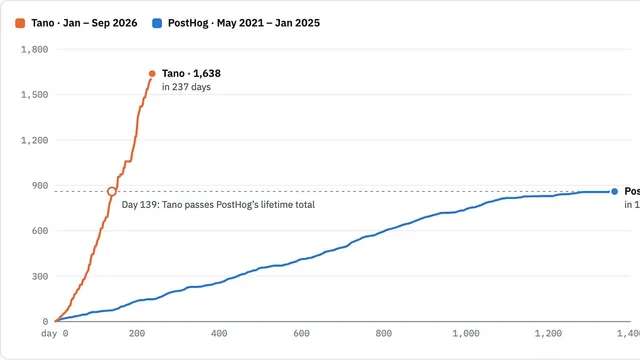
Software engineer Neil Kakkar reports about 11 times more monthly PRs at AI-native startup Tano than at PostHog, which he treats as a pre-AI baseline. He describes coding agents changing review and collaboration, while noting trade-offs such as optional human code review.
Debian's DFSG, Licensing & New Packages Team has begun using LLMs to draft reviews of packages in the project's new queue, after an August vote favored responsible generative AI use. The practice has drawn objections and questions about where limits on LLM output should be set.
Meta's F3 Lightning decouples ads ML feature releases from shared execution, so features compile, validate, deploy, and roll back independently. It preserves efficiency with stable IDs, one execution plan, a shared memory buffer, and dense indexing; comparable features reach production 3.6x faster without added compute cost.
Vitest 5.0, a Vite-native testing framework from VoidZero, reports roughly 8–25% speed gains across most benchmark setups, with VM pools up to 53% faster. The release adds a Trace View and stricter defaults, requires Vite 6.4 and Node.js 22.12, and changes CI artifact paths to one .vitest/ directory.
AWS outlines an organization-wide RDS and Aurora posture dashboard that aggregates Trusted Advisor, Security Hub, CloudTrail, Config and Health events through EventBridge into one CloudWatch view. It flags databases missing deletion protection, Multi-AZ or backups and records who disabled a safeguard.
Amazon ECS can now publish CPU and memory use every 20 seconds for target-tracking policies, in addition to the 60-second default, and AWS says a faster publishing path delivers those readings sooner. In AWS benchmarks median across 24 runs per workload, time to trigger scale-out fell 76%, from 363 to 86 seconds.
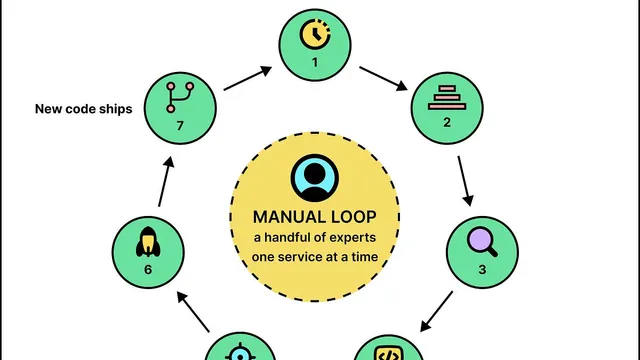
Netflix engineers built an autonomous agent pipeline that uses LLMs to analyze profiling data and propose code fixes. In production tests it identified CPU, regex, allocation and metric-registry bottlenecks, then required tests, canary telemetry and human review before deployment.
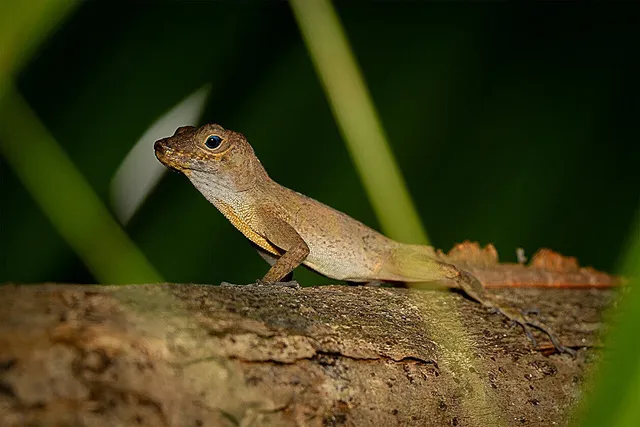
Yale researchers report that Caribbean anole species living deep in closed forest canopies raised their heat tolerance by about 2 degrees Celsius over a decade, while species in open or forest-edge habitats changed little. The team links the difference to behavioral thermoregulation and cautions that such adaptation has an eventual ceiling.
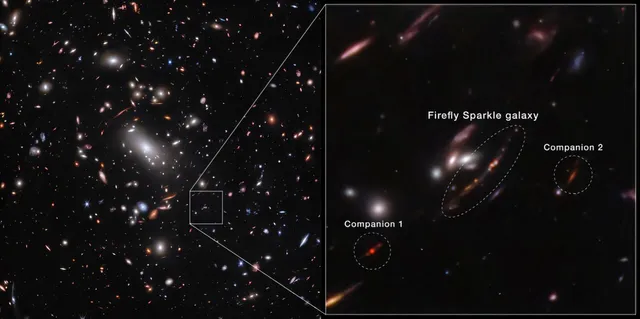
Modeling led by Viola Bocchi suggests dense, metal-poor young clusters detected by JWST, including the Cosmic Gems arc and Firefly Sparkle, could have produced intermediate-mass black hole seeds able to grow into supermassive black holes. The estimates rely on simulations, and JWST did not observe these black holes.
Archaeologists reexamined almost 3,000 flint artifacts excavated at Heliopolis in 1905–1906 and identified a workshop where skilled knappers made blades beyond local needs. They argue village-level craft specialization existed before Egypt's state formed around 3000 B.C.
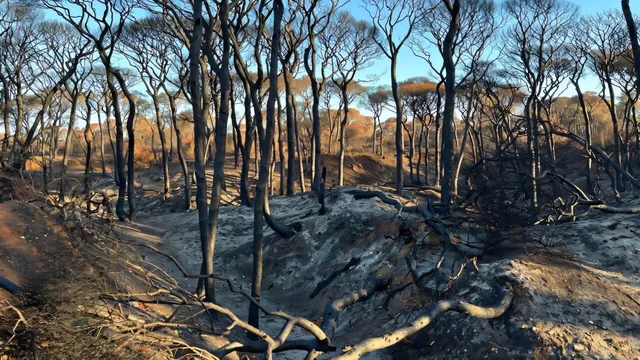
A study using 2001-2023 satellite records for 67,248 converted patches found that tree planting on nonforested land was linked to an average 26% rise in fire occurrence per hectare yearly and 23% more expected burned area per fire. Increases were largest in temperate conifer regions.
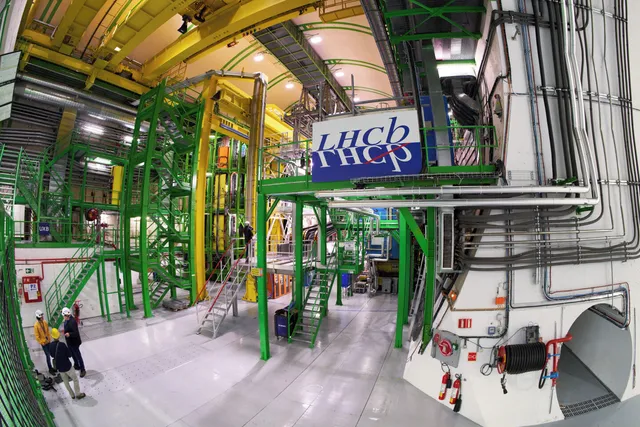
The upgraded LHCb experiment at CERN's Large Hadron Collider has yielded the first evidence of a decay called Bd to mu mu, a process predicted to occur roughly once per 10 billion beauty particles. The result reaches 3.2 sigma, which physicists say needs further data before the five-sigma level required for a discovery.
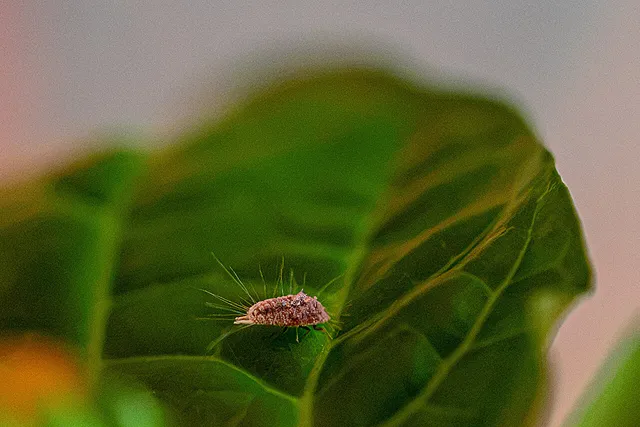
Early Texas A&M AgriLife Research findings suggest heat changes mealybug feeding, potentially explaining why some pasture mealybug outbreaks cause worse damage. The invasive pest, first confirmed in Texas in July 2025, has reached 114 counties and threatens forage for the state's $15.5 billion cattle industry.
Florida Republicans aim to extend their statewide dominance as voters choose Senate, governor and legislative offices under a new congressional map. The Senate race pits appointed Republican Sen. Ashley Moody against Democratic state Rep. Angie Nixon, while Rep. Byron Donalds and former Rep. David Jolly contest the governorship.
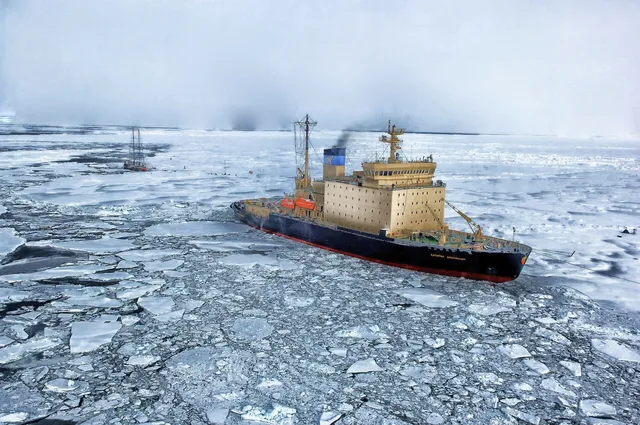
Concordia researchers report genomic evidence that Porticoccus arcticus may use acetone carboxylation to incorporate carbon dioxide while also capturing light energy via proteorhodopsins. The bacterium reached up to 9% of detected bacteria at some sites in the Beaufort Sea, though warming Arctic implications remain unknown.
As midterm Election Day began, early voting was on pace to exceed the last midterms, and voting had proceeded with relatively few problems. President Donald Trump has questioned the outcome if Republicans lose, while courts blocked several administration efforts to influence state elections.
Sociologists have developed and validated multi-item survey scales built on W.E.B. Du Bois' theory of double consciousness, covering its three constructs: the veil, second sight and two-ness. The paper describing the measures' development and validation was published in the Du Bois Review.
The Supreme Court hears arguments Tuesday in a case brought by Catholic preschools in Colorado that were excluded from a state-funded preschool program over their admissions policy for LGBTQ+ families. The schools, supported by the Trump administration, argue the exclusion violates their religious free-exercise rights.
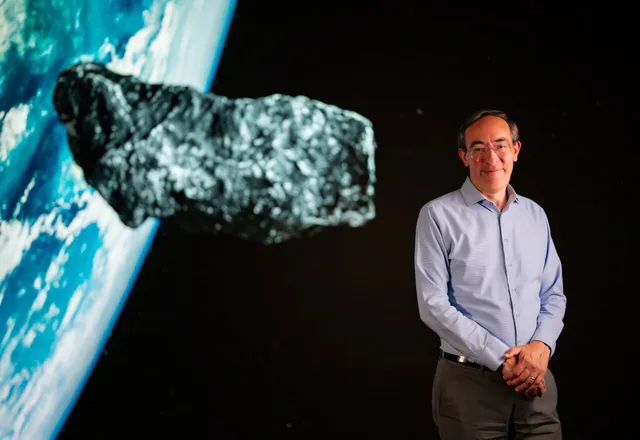
New simulations indicate that on an irregular asteroid, the side struck by an X-ray burst from a nuclear detonation strongly affects deflection, with one case giving 3.9 versus 0.8 millimeters per second. The model combined high-fidelity codes and ran over 1,600 times faster, though it cannot yet predict breakup of the entire asteroid.