A midterm lead for Democrats looks solid in the polls, but the numbers hide a messier picture underneath. Meanwhile, the Paramount-Warner Bros. merger clears its final hurdle today, reshaping who controls Hollywood.
— via NPR, Brittney Melton
A midterm lead for Democrats looks solid in the polls, but the numbers hide a messier picture underneath. Meanwhile, the Paramount-Warner Bros. merger clears its final hurdle today, reshaping who controls Hollywood.
— via NPR, Brittney Melton

Skydance officially takes the reins after clearing court fights, public pushback and regulators. The merger survived every challenge thrown at it; now the real test starts.
— via NPR, Mandalit del Barco
A Pentagon-commissioned study on autonomous weapons leans toward recommendations that could funnel business toward SpaceX and Anduril. Both companies have ties to the men shaping the study's conclusions.
— via NPR, Katie McQue
FBI units tracking foreign spies and corporate hacking crews have been quietly stripped of staff as the bureau redirects agents toward violent crime and immigration enforcement. Leadership under Kash Patel set the priorities; counterintelligence and cyber cases are paying the price.
— via NPR, Ryan Lucas
Employers added just 29,000 jobs in September, a steep slowdown that lands weeks before midterm elections. Cleveland Fed President Beth Hammack weighs in on what it means for prices and interest rates.
— via PBS NewsHour, Amna Nawaz

Only 17% of Americans approve of Trump's handling of living costs, a new AP-NORC poll finds, with 65% blaming his own policies for the pain. Even many Republicans say prices are worse than they expected, weeks before midterms that could cost the party Congress.
— via PBS NewsHour, Jill Colvin, Associated Press

The share of Americans paying cash for everything has been cut in half since 2015, down to 12%. Credit cards have quietly overtaken both cash and debit as the top way people pay, according to Federal Reserve diary data tracking three years of daily transactions.
— via Pew Research, Beshay Sakla
A genomics startup wants to edit disease-causing genes in human embryos, betting the payoff outweighs the danger. The claim puts it on a collision course with decades of caution around germline editing.
— via NPR, Rob Stein
A single Utah site could host more than 450 nuclear reactors spread across 9,500-plus acres, all to feed one data center project. The plan reveals how much power AI infrastructure now demands, and how far companies will go to secure it.
— via NPR, Geoff Brumfiel
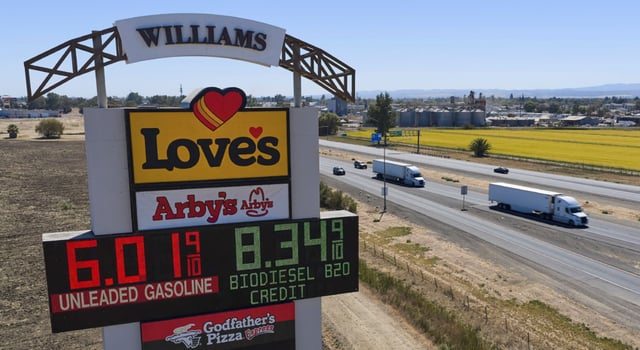
Diesel just topped $6 a gallon, and farmers, truckers and food banks are already bleeding cash for it. One Illinois grower says no 2025 budget accounted for the spike, while a food rescue nonprofit expects a $100,000 hit as Republicans push Trump toward an export ban before the midterms.
— via PBS NewsHour, William Brangham
Just 197,000 people filed for jobless benefits last week, the lowest since mid-July, even as elevated energy costs from the Iran conflict squeeze businesses. Employers are still hiring, but at a fraction of the pace seen in 2021-2022.
— via PBS NewsHour, Paul Wiseman, Associated Press
Starbucks is shuttering 250 North American stores this week, its second mass closure under CEO Brian Niccol after 627 locations and 900 corporate jobs got cut last September. The company won't say which stores are closing or how many are unionized, even as it presses ahead with retrofitting coffeehouses to look cozier.
— via PBS NewsHour, Dee-Ann Durbin, Associated Press
The CFPB just stopped publishing consumers' raw complaint narratives, the same records that helped expose a Wisconsin tribe charging up to 790% interest and credit bureaus quietly resolving fewer disputes. A ProPublica reporter breaks down what accountability journalism loses when the government buries its own consumer complaint files.
— via ProPublica, Joel Jacobs
Trump keeps blasting the Fed, but economists say that's not why your mortgage costs more. A 30-year loan just hit 6.95%, the highest in over 18 months, as AI spending and federal deficits collide with tight supply to end the cheap-money era for good.
— via PBS NewsHour, Christopher Rugaber, Associated Press