Inside the brains of killer bees
https://phys.org/news/2018-06-brains-killer-bees.html
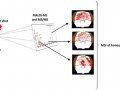
The researchers stimulated Africanized honeybees to attack by hanging spherical, black leather targets in front of their colonies. Angry guard bees quickly attacked the targets, becoming embedded in the leather by their stingers. Meanwhile, gentler bees kept their distance. The researchers collected both groups of bees and analyzed their brains by mass spectral imaging. In the brains of aggressive bees, two longer neuropeptides were cleaved into shorter ones, but this did not happen in the gentler bees. The researchers then injected the shorter peptides into anesthetized, non-aggressive bees, which became combative upon waking. The study provides new insights into the neurological basis for aggressive honeybee behavior, the researchers say.
                                    Explore further:
                                    Genes key to killer bee's success
> More information:Marcel Pratavieira et al. MALDI Imaging Analysis of Neuropeptides in Africanized Honeybee (Apis mellifera) Brain: Effect of Aggressiveness, Journal of Proteome Research (2018). DOI: 10.1021/acs.jproteome.8b00098