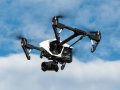
Drones could be used to detect dangerous 'butterfly' landmines in post-conflict regions
https://phys.org/news/2018-06-drones-dangerous-butterfly-landmines-post-conflict.html
Researchers at Binghamton University have developed a method that allows highly accurate detection of "butterfly" landmines from low-cost commercial drones. Assistant Professor of Energy Geophysics Alex Nikulin and Director of the Geophysics and Remote Sensing Laboratory Timothy de Smet used mounted infrared cameras to remotely map the dynamic thermal conditions of the surface and recorded unique thermal signatures associated with the plastic casings of the mines. During an early-morning experiment, they found that the mines heated up at a much-greater rate than surrounding rocks, and they were able to identify the mines by their shape and apparent thermal signature. Results indicate that this methodology holds considerable potential to rapidly identify the presence of surface plastic MECs during early-morning hours, when these devices become thermal anomalies relative to surrounding geology.
"We believe our method holds great potential for eventual wide-spread use in post-conflict countries, as it increases detection accuracy and allows for rapid wide-area assessment without the need for an operator to come into contact, or even proximity of the minefield," said Nikulin. "Critically, once further developed, this methodology can greatly reduce both costs and labor required for mine clearing operations across post-conflict regions."