
Philosophy
— Exploring ideas about ethics, metaphysics, epistemology, and how we thinkGeneral

A 17th-century philosopher never wrote about border policy, but a newly published text shows him proposing a test still missing from today's migration debates: imagine being the one detained, separated or deported before deciding the policy is justified. Leibniz's principle doesn't settle the arguments, it just makes evasion harder.
— via Blog of the APA, Lloyd Strickland
A library once dedicated to H.L. Mencken now bears another Baltimore journalist's name, and the swap is no injustice. The case for letting Mencken's ghost roam unrespectably, rather than enshrining a writer whose politics never quite held together.
— via 3 Quarks Daily, S. Abbas Raza
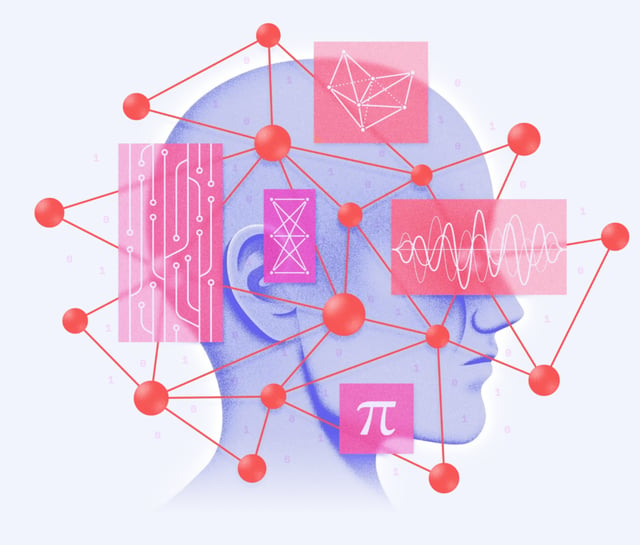
AI already disproved a geometry conjecture and found a new matrix-multiplication algorithm. A philosopher-computer scientist argues the same systems are about to make philosophy a capital-intensive discipline, driven less by solitary thinkers than by compute.
— via Daily Nous, Justin Weinberg
An autism diagnosis in 2023 exposed two competing reactions that both undermine the person being diagnosed: dismissing the condition as a flaw to deny, or praising it as a hidden superpower. Drawing on philosophy's account of epistemic injustice, the author explains why both responses erode credibility rather than build it.
— via Blog of the APA, Agata Mala
A physicist best known for explaining quantum gravity to general readers now wants to collapse the distinction between minds and stones, electrons and laws. His latest book argues nothing in the universe differs essentially from anything else, a claim stranger and bigger than his earlier bestsellers ever attempted.
— via 3 Quarks Daily, S. Abbas Raza
The Met's new Krasner-Pollock show is gorgeously installed, but the real draw has nothing to do with art history. Visitors come to gawk at a marriage, and to ask how Lee Krasner outlived it and kept painting while a passenger in Pollock's fatal crash did not.
— via 3 Quarks Daily, Morgan Meis
One critic's personal shelf holds the books he loves most, and Cormac McCarthy's debut novel edges out all his other masterpieces for the single spot. The proof is one sentence about a shadow crossing a roof, picked apart word by word to show why it works.
— via 3 Quarks Daily, Azra Raza
Algorithmic bosses don't just hide decisions behind opaque code: they're quietly dismantling the collective resistance that built the labor movement. Workers end up isolated, outgunned by surveillance, and unsure who's even making the call to fight.
— via Blog of the APA, Orlando Lazar
David Byrne, the man who gave us bike racks and tree drawings between Talking Heads albums, has written a book about failure. Specifically, about ignored ideas and forgotten artists he calls "sleeping beauties," a term borrowed from a 2004 scientometrics paper that took two decades to turn into this.
— via 3 Quarks Daily, Azra Raza
Harvard has produced 72 APA presidential terms across the association's three divisions, dwarfing every other Ph.D.-granting institution. A new data dig into a century of philosophy's top job finds Yale shut out since 2006 and only 53 schools ever represented at all.
— via Daily Nous, Justin Weinberg
AI labs are racing to automate science by making agents smarter, but a new paper argues the real bottleneck is something duller: who gets lab time and money. Researchers propose building actual markets and institutions for AI scientists to trade resources, claim credit and get blamed when experiments go wrong.
— via 3 Quarks Daily, S. Abbas Raza
Scientists sequenced 163 ant species spanning 12 subfamilies and found "jumping genes," long dismissed as genomic junk, actually drive evolution. The ant lineages carrying the most of these mobile DNA sequences turned out to be the most species-rich alive today.
— via 3 Quarks Daily, S. Abbas Raza
A besotted collector turned dealer, a looted Khmer goddess, and a Met scandal: one book traces how Douglas Latchford spent fifty years feeding stolen Cambodian sculpture into the world's top museums while posing as the country's great protector, dying before trial could catch up.
— via 3 Quarks Daily, Leanne Ogasawara