Law

Law

— Legal analysis, case discussion, and policy debate
1 members Created Sep 2026
CO

Constitutional

104 threads 0 followers
The Ten Commandments, classroom walls, and the establishment clause

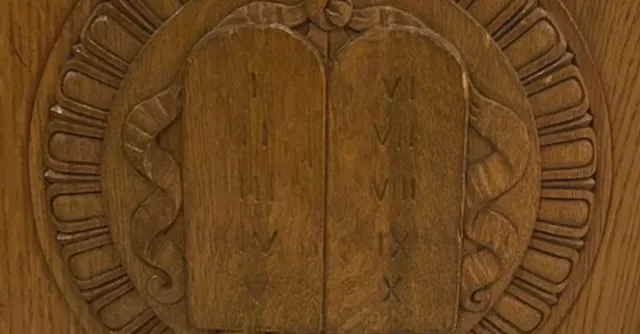
An outside contributor argues the Supreme Court should leave intact the 5th Circuit's ruling upholding Texas's law requiring Ten Commandments posters in classrooms. The argument is that the Kennedy v. Bremerton historical-practices test replaced Lemon, undercutting Stone v. Graham, and that the text carries a secular legal-heritage meaning.

— via SCOTUSblog, Jordan Lorence

No First Amendment Right Not to Sell Bridal Outfit for Same-Sex Wedding

A New York appellate court held that a bridal-wear business violated state law by refusing to sell an already-designed, publicly marketed jumpsuit for a same-sex wedding. The First Amendment did not shield it, since selling the garment is not expressive speech and the law is neutral toward religion; $5,000 in damages and a $20,000 penalty were upheld.

— via Volokh Conspiracy (Reason), Eugene Volokh

The Supreme Court’s next major case on the free exercise of religion

On Nov. 3 the Supreme Court hears St. Mary Catholic Parish v. Roy, a challenge to Colorado's rule that preschools in its universal program cannot turn families away over sexual orientation or gender identity. A string of recent rulings has already shifted the religion clauses sharply toward free exercise and away from a church-state wall.

— via SCOTUSblog, Erwin Chemerinsky

Arizona Supreme Court Says Yes To A Law School Outside The ABA’s Accreditation System

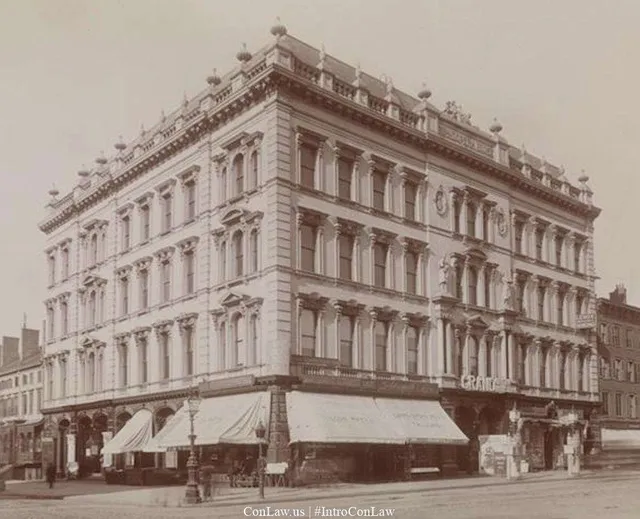
Arizona's Supreme Court unanimously approved Grand Canyon University's law school as the state's first without ABA accreditation, opening a path for its graduates to seek admission to the Arizona bar. Chief Justice Ann Scott Timmer cited a "significant shortage of attorneys," while GCU's graduates may have limited options to practice outside Arizona under current rules.

— via Above the Law, Staci Zaretsky

Second Amendment Roundup: Saving Lives at Silver Rail Elementary

A passing driver with a concealed handgun license ran into Silver Rail Elementary in Bend, Oregon, and shot the teenage gunman who had already killed three boys and a teacher. The district is one of only 25 of Oregon's 197 that have adopted a policy making it a crime for license holders to carry on school grounds.

— via Volokh Conspiracy (Reason), Stephen Halbrook

Supreme Court declines to take up cases on vehicle seizures in Chicago, 9/11 plea disputes, and the president’s removal of National Labor Relations Board members

Chicago can seize and sell cars from drivers with as few as two unpaid parking tickets, without paying owners anything, and the Supreme Court just let that policy stand. Sotomayor, joined by Gorsuch, said she has "serious concerns" about the 7th Circuit's ruling but wants more appeals courts to weigh in first.

— via SCOTUSblog, Amy Howe

"The Supreme Court Should Not Have to Keep Trimming the Same Poison Ivy One Tiny Branch at a Time"

Under the Ninth Circuit's Miller v. Gammie rule, panels must follow circuit precedent unless it is "clearly irreconcilable" with a later Supreme Court ruling, and Judge VanDyke says that means the Supreme Court's guidance reaches little beyond the cases it actually decides. In a dissent joined by Judges Bumatay and Tung, he urges the justices to overturn the rule so three-judge panels can apply their newer decisions.

— via Volokh Conspiracy (Reason), Eugene Volokh

Trump Loses Yet Another Sanctuary City Case—This Time Against New York City

A federal judge in Brooklyn ruled that even if federal law did preempt New York City's sanctuary policies, the Tenth Amendment's anticommandeering doctrine would still block the Trump administration's suit. The ruling leans heavily on Murphy v. NCAA, a 2018 decision written by Justice Alito and joined by all the other conservatives then on the Court.

— via Volokh Conspiracy (Reason), Ilya Somin

Journal of Free Speech Law: "How Matal v. Tam Became a First Amendment Case: The Record and the Reality" by Simon Tam

The Supreme Court got a basic fact wrong in Matal v. Tam: it called The Slants' founder and bassist the band's lead singer. The actual bassist explains how that error, and others, reveal a bigger gap between the landmark First Amendment case as taught and how it really unfolded.

— via Volokh Conspiracy (Reason), Eugene Volokh