

Git issued version 2.56.1 and backports for the 2.50 through 2.55 series to correct CVE-2026-111760, an integer truncation that could let a malicious repository execute code during a recursive clone by replacing a submodule's .git file with a symlink to a folder of malicious hooks. GitHub has applied the fixes to its hosted services and published precautionary steps that it says do not substitute for installing a fixed version.
Tech industry, products, and how technology shapes society
Cursor disclosed that attackers used a stolen Fireworks AI access key to reach internal systems, then used an obtained credential to publish malicious Claude Code extension copies on its marketplace. Cursor says the affected versions were available for about 11 hours and may have reached up to 5,000 developers.
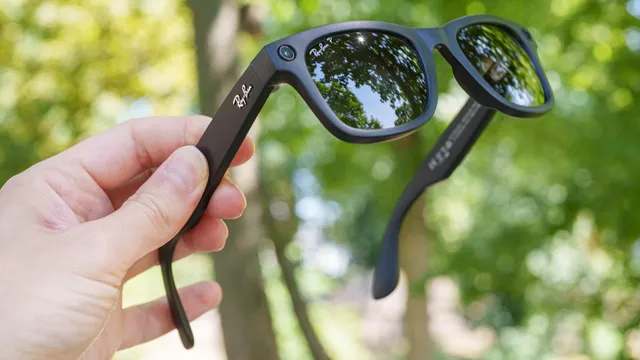
Courthouses, schools and military sites in several jurisdictions have moved to restrict camera-equipped smart glasses on privacy and safety grounds. Pakistan's Punjab province imposed a 30-day ban from October 2026 covering use and sale, while New York barred such glasses from all state and local courts starting July 20, 2026.
Italy's data protection authority fined Meta €805 million after finding Facebook's Android photo-suggestion feature was enabled by default and read Italian users' galleries without explicit consent. Meta has 60 days to turn the feature off by default and request separate consent; it intends to challenge the penalty, which it describes as disproportionate.
Nvidia's chief security officer David Reber left in August citing health reasons, and CEO Jensen Huang departed weeks later amid questions about extramarital relationships, including one with an executive at Megaspeed, a Singapore firm U.S. investigators suspect of routing Nvidia chips to China. Security specialists say affairs can give foreign intelligence services leverage, though nothing public links the staffing changes to that inquiry.
Italy’s Garante fined Meta €805m, saying Facebook’s Android app accessed Italian users’ photos, videos and metadata without specific consent or proper notice. The regulator ordered separate consent for gallery suggestions and said the feature must remain off by default.
CISA added CVE-2026-114713, a high-severity UnrealIRCd flaw rated 8.6, to its known exploited vulnerabilities catalog after reports of active attacks. The labeled-response bug lets any user on a network of two or more linked servers inject server-to-server commands run with server authority; a hotfix was released November 7, 2026.
The U.S. seized cloud infrastructure behind FaceStealer, a North Korean social-engineering operation that stole more than $400 million in cryptocurrency, according to an FBI alert. Researchers attributed the campaign to BlueNoroff and reported 677 targets across 58 countries, with fake video calls used to deliver malware that steals crypto and credentials.
Bitdefender’s macOS threat report, drawing on over 1.5 billion security events from August 2025 to July 2026, says adware rose to 34.4% of blocked detections from 22.6%, while trojans remained the largest category at 45.2%. It also examines ClickFix fake CAPTCHAs that push users to paste Terminal commands, plus three notarized apps that Palo Alto Networks’ Unit 42 listed as carrying the FlutterShell backdoor.
CISA added two high-severity flaws to its Known Exploited Vulnerabilities catalog and set a November 16, 2026 deadline for federal agencies to address them. The UnrealIRCd command-injection bug drew exploitation attempts, while a Check Point privilege-escalation flaw was used in attacks that deployed a wiper.
Alex Stamos, Cognition’s chief security officer, warned that open-weight AI models let low-skilled attackers automate most of the attack chain and urged companies to run AI red-team tests on their own networks within roughly 90 days. He told The Verge’s Decoder podcast that the attacks started with three South Korean banks, then hit roughly 200 additional companies in the week preceding the interview.
Security firm Claroc told Ars Technica that a link-generation flaw in SpaceXSI's Grok Build coding agent exposed sensitive material from thousands of users, including a hospital group, a fire department and SpaceXSI itself. Because the random words sat left of the domain, passive DNS databases could index those pages; SpaceXSI removed 24 of its own apps after being tagged on X.
Microsoft released updates addressing 1,093 vulnerabilities, including 63 critical flaws and an Outlook spoofing bug, CVE-2026-124194, that is already seeing active exploitation. Adobe, Apple, Google and Mozilla also pushed security fixes this week.
Apple's iOS, iPadOS and macOS 27.2.1 updates address a set of security flaws, including iMessage group-chat bugs and AirPlay and Bluetooth issues that could let attackers pair devices or corrupt process memory. Apple credits itself for four of the findings and gave no indication the flaws were exploited in the wild.
Researchers at Apiiro found that Claude Code's local settings files can be committed to public GitHub repositories, exposing database passwords, API tokens and private keys. They identified more than 100,000 uploaded settings files, of which about 1,100 from 63 organizations contained secrets.
The U.S. Supreme Court ruled in Cisco Systems, Inc. v. Doe I that the Alien Tort Statute does not let courts create new causes of action, dismissing claims that Cisco aided human rights abuses through China’s Golden Shield. EFF, which filed amicus briefs, calls for federal legislation to hold technology companies accountable.
The US Justice Department says three men allegedly used deepfakes of CEOs and law firm attorneys to persuade staff to send over $129 million to accounts under their control. The indictment names Jacob Soall, Sharon Hazan and Guy Sheetrit and charges wire fraud, identity theft and money laundering.
FinCEN barred Seychelles-based MEXC Global from the U.S. financial system, citing sanctions evasion and cybercrime links; its order says illicit transactions totaled at least $16 billion from May 2021 to May 2026. MEXC said it is reviewing the order, operating normally, and has begun an independent review of its AML and sanctions controls.
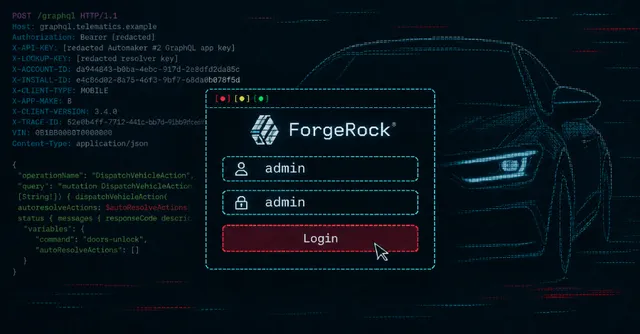
Shubham Shah and Sam Curry found identity servers behind two automakers' mobile apps retained the documented default admin login, exposing customer records and vehicle commands. They tested unlocking and starting only cars they owned or were permitted to use in the US in February 2026; each system was fixed roughly two hours after they reported it.
OpenAI introduced GPT-6 Cyber on November 5 and rated it Critical for cybersecurity under its Preparedness Framework, limiting access to vetted security teams via the API and Codex. The model completed 48.5% of ExploitGym tasks versus 32.1% for its predecessor, and OpenAI says it found 81 previously unknown high-severity Firefox flaws.